
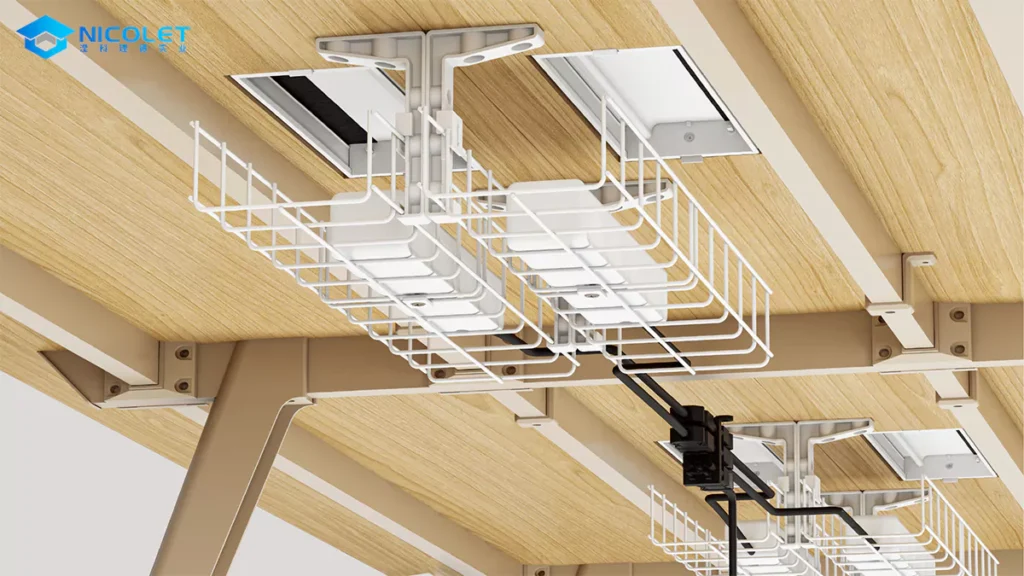
Cable Management Solutions for Modern Workplaces: Creating Cleaner and More Efficient Offices
Introduction
Modern workplaces depend on technology more than ever.
Computers, monitors, charging devices, and network equipment have become essential parts of daily work.
However, as technology increases, so does the challenge of managing cables.
- Messy cables can affect:
- workplace appearance;
- installation efficiency;
- maintenance;
- employee experience.
This is why professional cable management solutions have become an essential element of modern workplace design.
A well-designed cable management system does more than hide cables.
It helps create cleaner, safer, and more adaptable work environments.
Why Cable Management Matters in Modern Offices
A workplace is not only defined by furniture.
Every detail contributes to how people experience the space.
While desks and chairs are highly visible, cable management works quietly in the background.
Professional cable organization helps workplaces achieve:
Cleaner Workspace Appearance
Visible cables create unnecessary visual distraction.
Organized cable routing creates a more professional and comfortable environment.
Improved Workplace Safety
Loose cables can create:
- tripping risks;
- maintenance difficulties;
- unnecessary clutter.
A proper cable management system keeps cables secure and organized.
Easier Maintenance
Modern offices change frequently.
Employees move.
Equipment changes.
Technology upgrades.
Well-planned cable management makes future adjustments easier.
Common Office Cable Management Challenges
1. Too Many Devices at One Workstation
A modern desk may include:
- monitor;
- laptop;
- docking station;
- power adapter;
- network connection;
- charging devices.
Without proper organization, cables quickly become difficult to manage.
2. Unorganized Under Desk Space
The area beneath desks is often overlooked.
However, this space contains many important connections.
Without an effective solution, it can become:
- messy;
- difficult to clean;
- difficult to maintain.
3. Difficult Workplace Reconfiguration
Modern offices require flexibility.
Teams expand.
Layouts change.
Furniture moves.
A professional cable management system supports easier workplace adaptation.
Types of Cable Management Solutions for Offices
Different workplace applications require different solutions.
Cable Trays and Cable Baskets
Under desk cable trays and baskets are commonly used to organize:
- power cables;
- data cables;
- adapters;
- extension cords.
They keep cables hidden while maintaining easy access.
Benefits include:
✓ cleaner appearance;
✓ easier installation;
✓ improved maintenance.
Desk Cable Grommets
Cable grommets provide convenient access points for cables through desktops.
They help:
- organize desktop connections;
- reduce visible cable clutter;
- improve workstation appearance.
They are widely used in:
- office desks;
- conference tables;
- executive workstations.
Cable Spines
Cable spines provide flexible vertical cable routing between desks and floor connections.
They are especially useful for:
- height-adjustable desks;
- open offices;
- flexible workstations.
Integrated Cable Management Systems
The best workplace designs consider cable management from the beginning.
An integrated workstation solution may combine:
When these elements work together, the result is a cleaner and more efficient workplace.
Cable Management and Workplace Design
Great office design is not only about visual appearance.
- It is also about:
- functionality;
- flexibility;
- user experience.
Professional cable management supports workplace designers and furniture suppliers by helping create:
Better Project Results
Integrated cable solutions make projects easier to specify and install.
More Professional Environments
Clean cable organization improves the overall impression of a workplace.
Future-Ready Workspaces
Flexible cable systems allow offices to adapt to changing technology needs.
Supporting Furniture Brands and Workplace Partners
For office furniture manufacturers, dealers, and distributors, cable management is an important part of complete workplace solutions.
By adding professional cable solutions to their product portfolio, partners can provide greater value to customers.
Nicolet supports global workplace partners with:
- product development;
- OEM and ODM manufacturing;
- customization;
- technical support.
Nicolet Cable Management Solutions
Nicolet develops cable management products designed for modern workplace applications.
Our solutions include:
- Under Desk Cable Trays;
- Cable Baskets;
- Desk Cable Grommets;
- Cable Spines;
- Workspace Organization Accessories.
Combined with power and connectivity solutions, Nicolet helps partners create cleaner, smarter, and more efficient workplaces.
Better Workplaces Start with Better Details
The best workplace solutions are often created through small improvements.
Cable management may not always be the first thing people notice.
But it is one of the details that makes a workplace function better every day.
By organizing technology properly, businesses can create spaces that look better, work better, and adapt better.
Nicolet — Improving workspaces. Elevating efficiency.
FAQ
What is office cable management?
Office cable management is the process of organizing and routing workplace cables to improve appearance, safety, maintenance, and workspace efficiency.
Why is cable management important in modern workplaces?
Cable management helps reduce clutter, improve workplace safety, simplify maintenance, and create cleaner professional environments.
What are common office cable management solutions?
Common solutions include:
- cable trays;
- cable baskets;
- cable grommets;
- cable spines;
- integrated workstation cable systems.
How does cable management improve office design?
Professional cable management helps designers create cleaner, more flexible workplaces by integrating technology organization into the overall workspace design.
Can cable management products be customized?
Yes. Manufacturers with OEM and ODM capability can customize designs, materials, finishes, and specifications based on project requirements.